

Why We Chose This: The Questions Every Piece Has to Answer Before It Comes Into Flux
Running an independent shop means making hundreds of small decisions a year about what earns a place on the shelves. Trade fairs, supplier catalogues and new-season samples all arrive with more beautiful things than any one shop could hold. Most of them do not come in.
People sometimes ask how we decide. The answer is a short list of questions, asked of everything from a $9 stem to a $200 clock. Here they are, with a few pieces that show what a yes looks like.
Would we use it at home?
This is the first question and the one that rules out the most. If we would not want it in our own kitchen, bathroom or living room, we do not ask anyone else to put it in theirs.
It is why so much of what we stock is quietly practical. The Good Change Wooden Dish Brush is a good example: an everyday tool, made from FSC beech with tampico plant-fibre bristles, that looks good enough to leave out on the bench beside the sink rather than hide in a cupboard.

Will it still look right in ten years?
Trends move fast in homewares. We would rather stock things that have already proven they can outlast them. Design history is a useful guide here.
The Stendig Calendar was designed by Massimo Vignelli in 1966 and has barely changed since. Its oversized numerals looked modern then and still do now, which is exactly the kind of staying power we look for. We told its full story in The Stendig Calendar.

Is the material honest?
We are drawn to materials that show what they are: wood that looks like wood, stone with real veining, glass you can see the weight of. Natural materials also vary piece by piece, which means no two are quite the same.
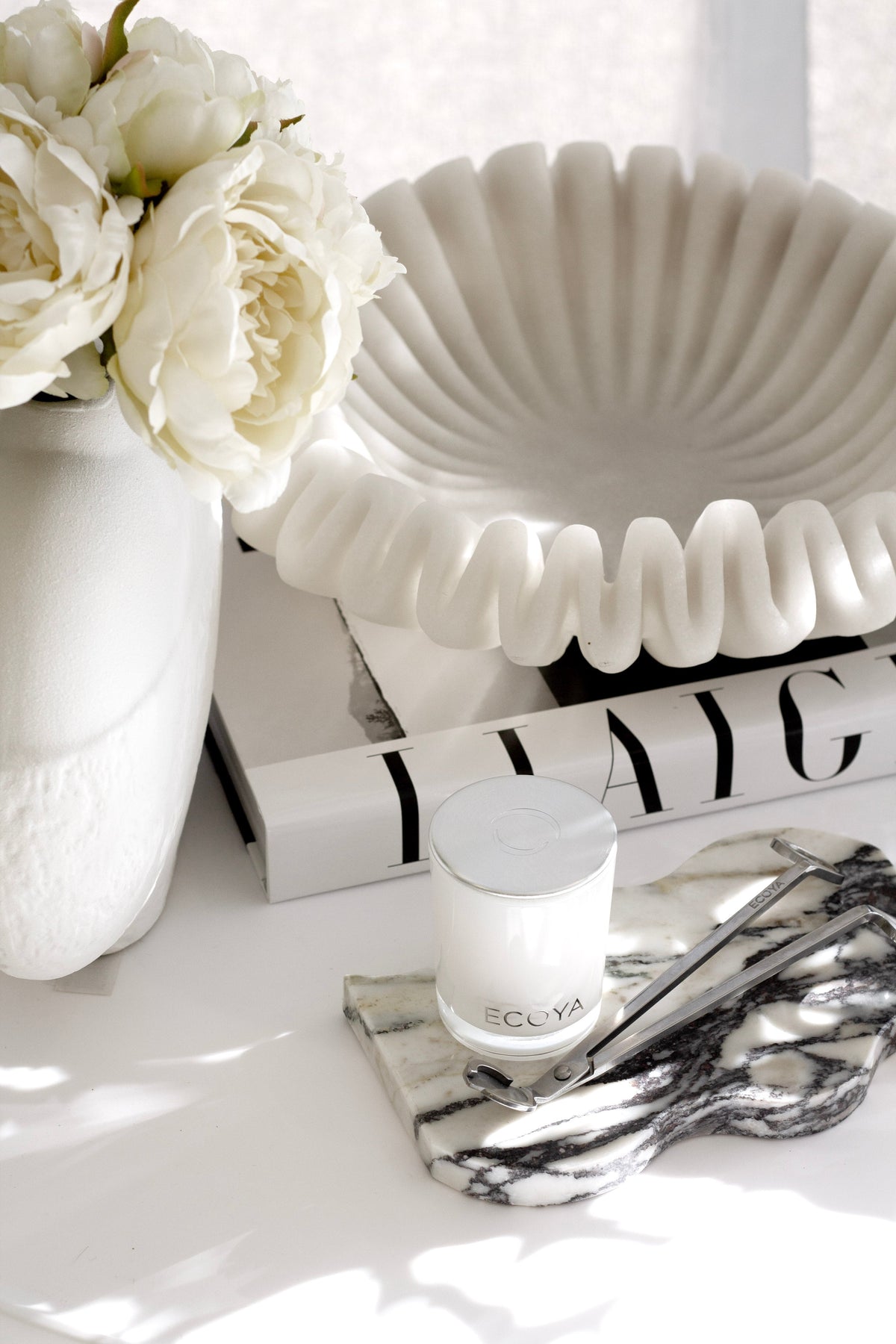
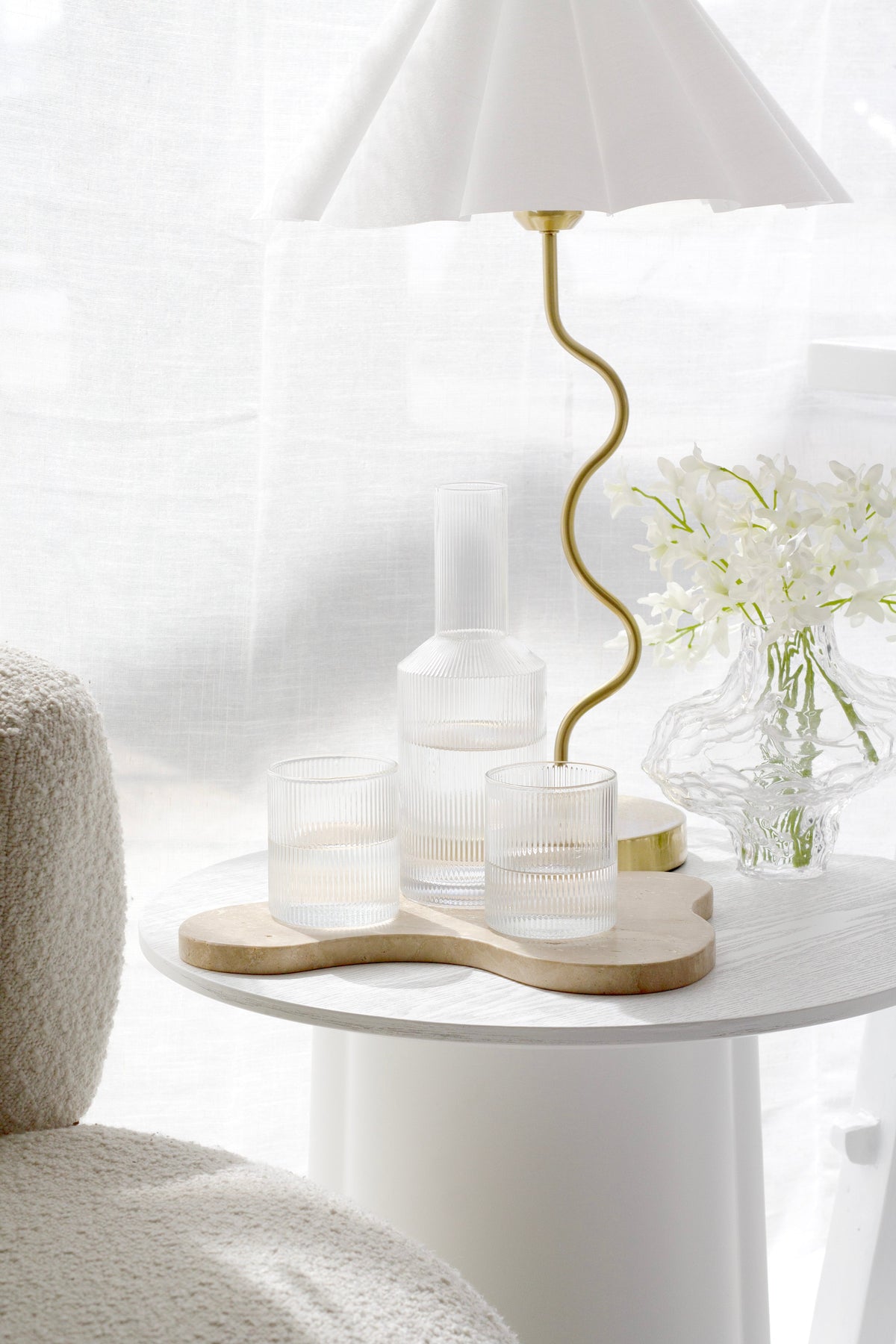
The Frida Wavy Marble Tray is cut from Calacatta marble, so each one has its own veining, and the Karlsson Pure Wood Grain Wall Clock lets the grain of its basswood show through. Both bring warmth to a pale room without adding colour.

Does it do its job well?
A candle should burn evenly and fill a room. A clock should be easy to read. A faux flower should be convincing from a metre away and still hold up to a closer look. Those are the standards we hold each piece to.
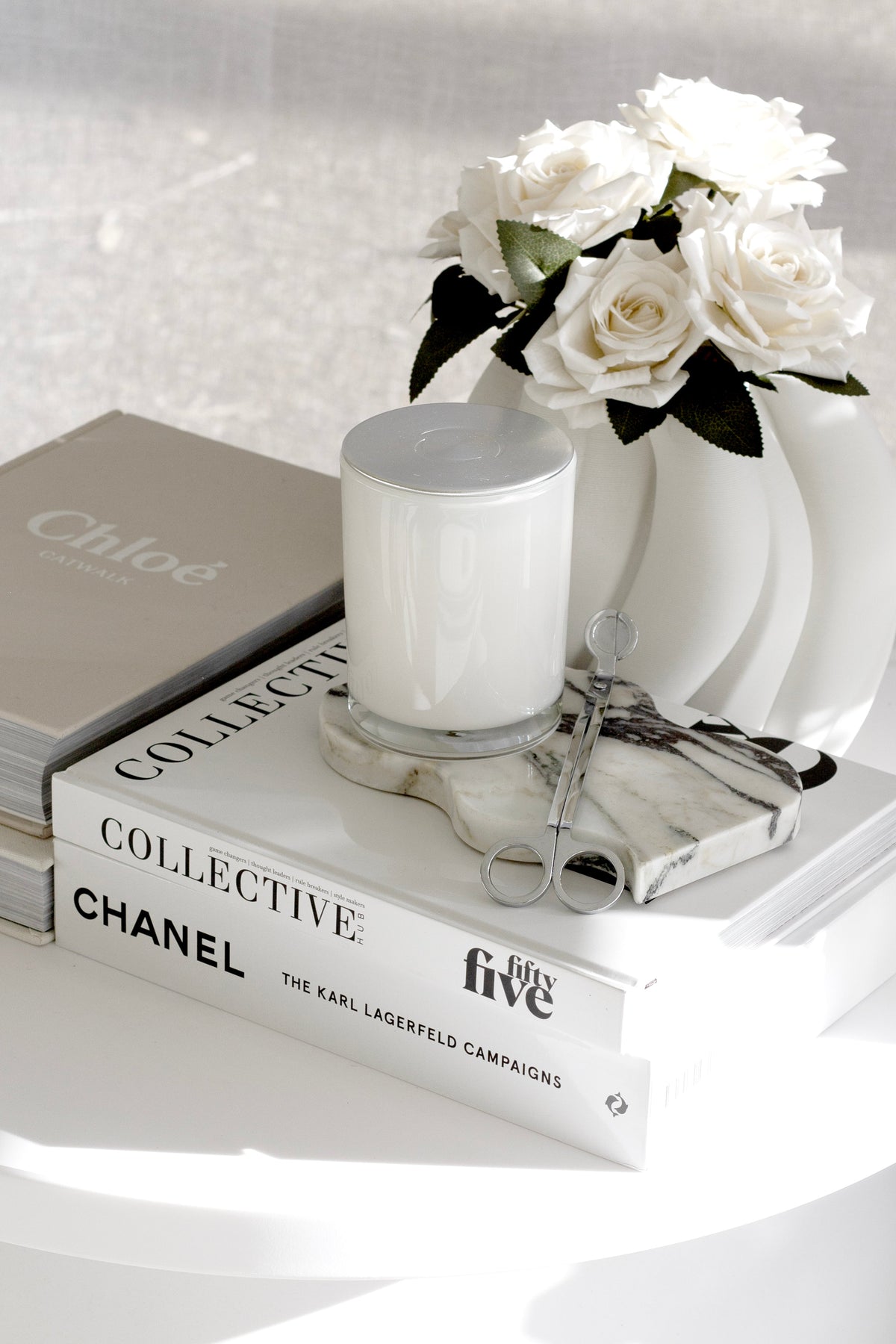
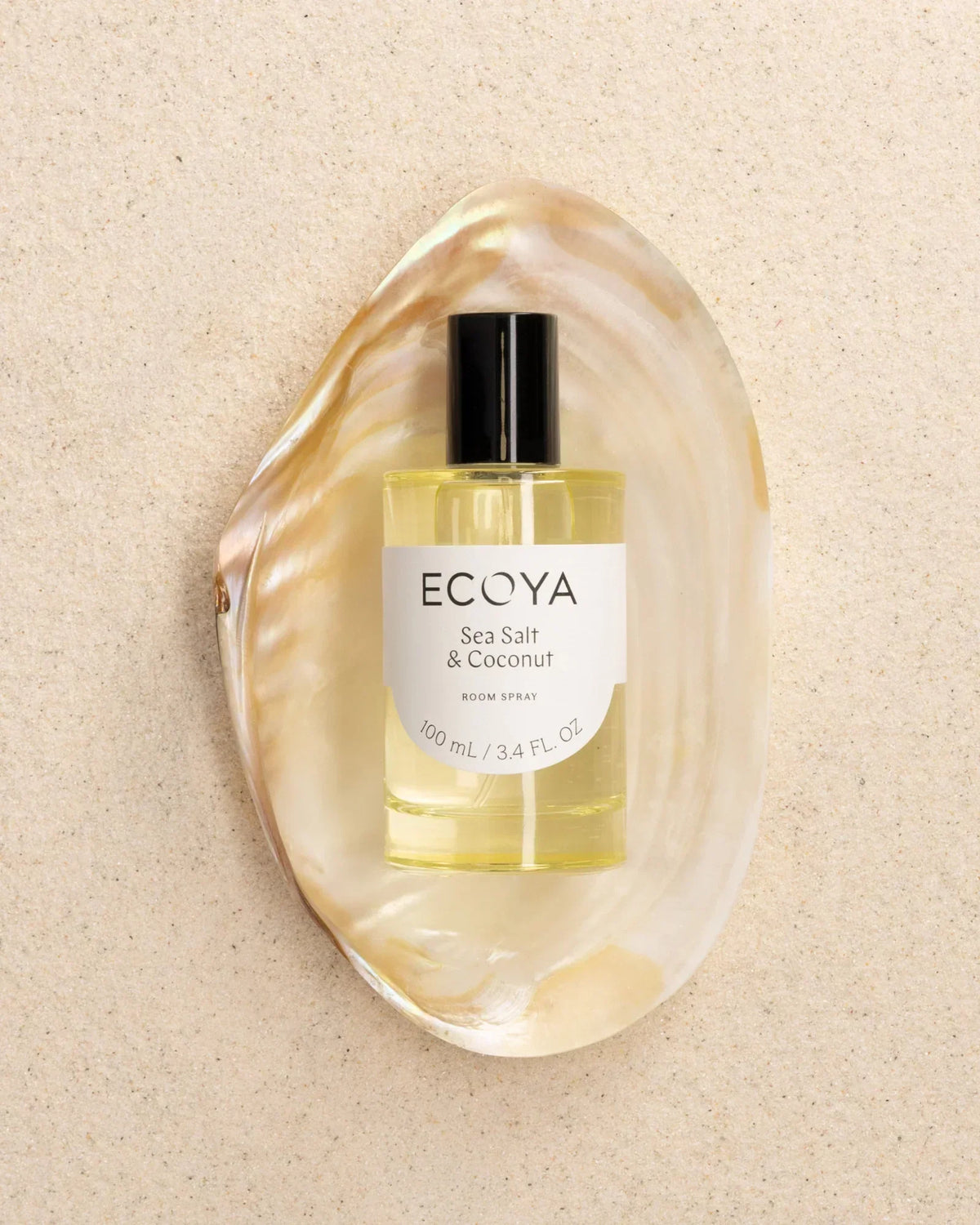
Ecoya is a New Zealand fragrance house whose candles we have stocked for years. The Ecoya Madison Jar Soy Candle is rated at up to 80 hours in the large 400g size, which is part of why it earns its place.

Does it suit a New Zealand home?
Our light is bright and clear, our houses are often open to the outdoors, and many of us live close to the coast. Pieces that look moody and dramatic in a northern-hemisphere catalogue can look heavy in a sunlit Bay of Plenty living room. We choose with our own light in mind, which is why the shop leans towards pale timber, linen, stone and soft neutrals.
Faux flowers are a good example. A single Petite Hydrangea Stem in cream or soft blue-green sits comfortably in a coastal room and keeps its colour indoors out of direct sun, with no water to change.

Is the price fair for what it is?
Not cheap, and not expensive for the sake of it. Fair. Something at $15 should feel like a good $15, and something at $150 should justify every dollar in how it is made and how long it will last. When a piece does not pass that test, it does not come in, however lovely it is.
Why this matters to you
A small shop is, in the end, a point of view. You can find almost anything online, but what a shop like ours offers is the edit: a smaller, considered selection, chosen by someone who has asked these questions so you do not have to. It is also the reason we care about you shopping small, and why every choice on the shelves is one we are happy to stand behind.
Start with our Gift Edit, a tight selection of the pieces we would give ourselves.
In Short
Flux Boutique chooses every product by asking the same questions: would we use it at home, will it still look right in ten years, is the material honest, does it do its job well, does it suit a New Zealand home and light, and is the price fair for what it is. Examples include the Good Change wooden dish brush in FSC beech, the 1966 Stendig Calendar by Massimo Vignelli, the Frida marble tray, the Karlsson Pure wood grain clock, the Ecoya Madison soy candle and faux hydrangea stems. The result is a smaller, considered edit rather than an endless range.



Leave a comment
This site is protected by hCaptcha and the hCaptcha Privacy Policy and Terms of Service apply.