



Relaxed Coastal Style: How to Create a Calm, Light-Filled Home

The best coastal rooms in New Zealand are rarely the ones with the sea view. They are the ones that have learnt something from the coast: how light moves across a floor late in the afternoon, how a timber table softens over ten summers of salt and sun, how little you actually need on a shelf before it starts to feel considered.
Relaxed coastal style has travelled a long way from navy stripes and rope-wrapped lanterns. What has replaced it is quieter, warmer and far more liveable, and it works as well in a Hamilton villa as it does in a bach at Pāpāmoa.
Not anchors, not stripes

The shift is from scenery to sensation. Older coastal decorating borrowed the imagery of the sea: shells in glass jars, the word BEACH on a driftwood sign, a cushion with a starfish on it. The current version borrows the conditions instead. Diffused light. Materials weathered rather than finished. Colours sitting within a few tones of one another so nothing competes for attention.
It draws on the same instincts as Japandi and Scandinavian interiors, which is why the two sit so comfortably together. Restraint, natural materials, and an acceptance that a room does not need to look finished to be right. If you want the same palette with more confidence and contrast, modern coastal glam is the louder sibling of this look.
There is a practical reason it suits New Zealand houses in particular. Ours are built to open up. Bifolds, decks, a back door that stays ajar from November to March. A style that tolerates sand on the floor and salt in the air is not a compromise here, it is the only version that survives a summer.
A palette that starts with sand

Coastal colour is routinely misread as blue. In practice it sits much closer to the beach itself at eleven in the morning: bleached, warm, low in contrast.
Build from warm white, oat, ivory, flax and bleached timber. Then layer stone, sage, seafoam, faded denim and clay, always in small amounts and always as accents rather than fields of colour. The rule holding it together is contrast, or rather the deliberate absence of it. Tones should sit close enough that the eye travels across a room without catching.
A useful test: photograph the room and convert the image to greyscale. If the tones separate into obvious light and dark blocks, the contrast is too high for this look. If it reads as one soft gradient, you are there.
Colour does more quiet work on mood than most of us give it credit for, which is worth reading more about in the colour effect.
Texture does the talking

When colour steps back, texture has to carry the room. This is where coastal style earns its warmth, and where most attempts either succeed or fall flat into something cold and hotel-like.
Look for raw or whitewashed timber, linen, jute, cotton and bouclé, seagrass and rattan, and handmade ceramics with visible maker's marks. Honed stone and matte tile in place of anything polished. A jute or wool rug underfoot does more for a coastal room than any amount of blue paint.
The useful discipline is to vary the weave rather than the colour. A flat-woven rug, a chunky knit throw, a loose linen curtain and a rough ceramic bowl can all sit within the same three tones and still give a room depth. Once you start looking for it, this is the difference between rooms that feel calm and rooms that feel unfinished.
Nothing glossy, nothing perfectly matched. The full material thinking is set out in designing with materials that support wellbeing.
Leave space around things

Coastal rooms feel calm largely because of what is not in them. Open plans help, but so does a much simpler discipline: resist filling every surface.
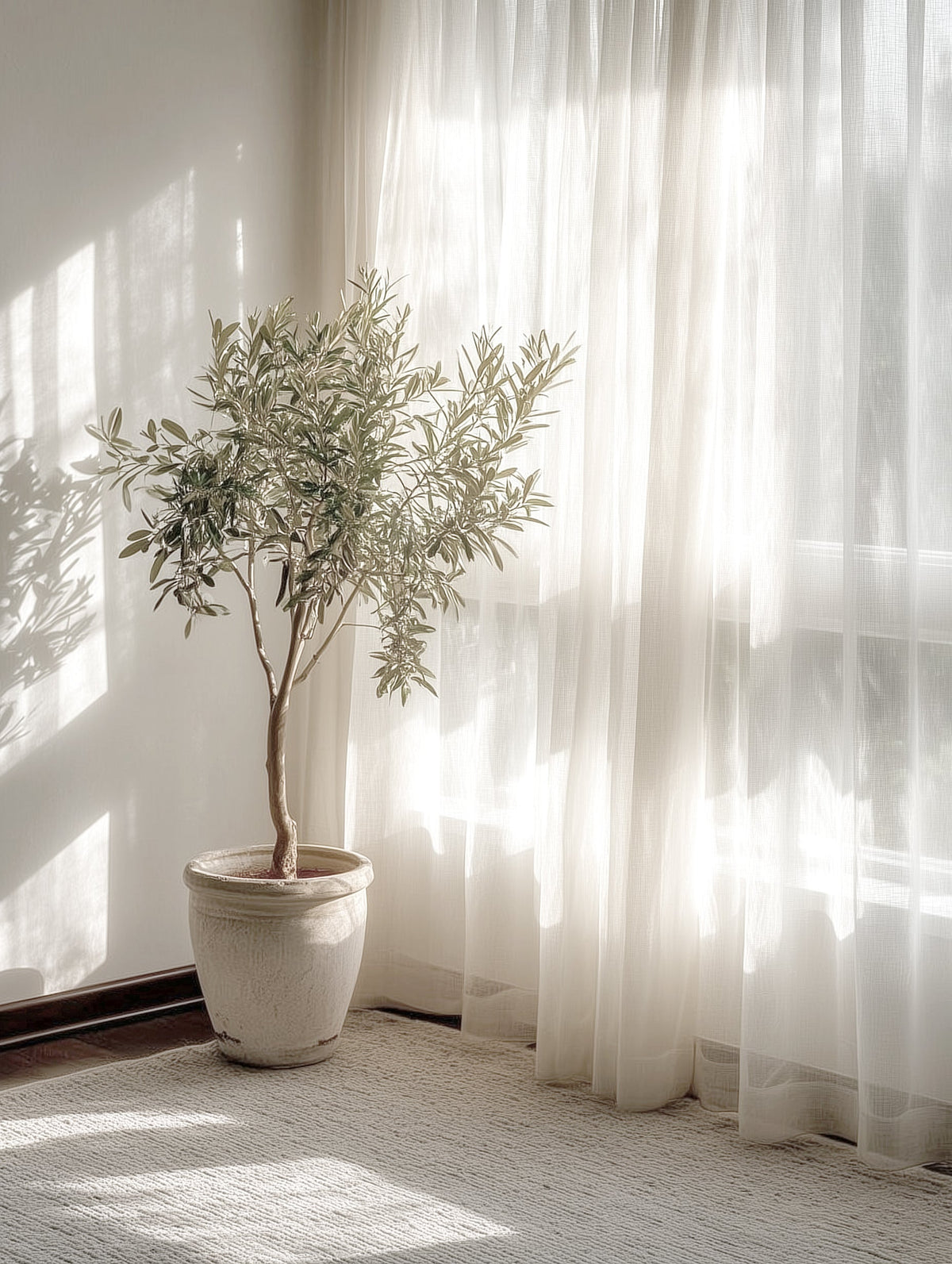
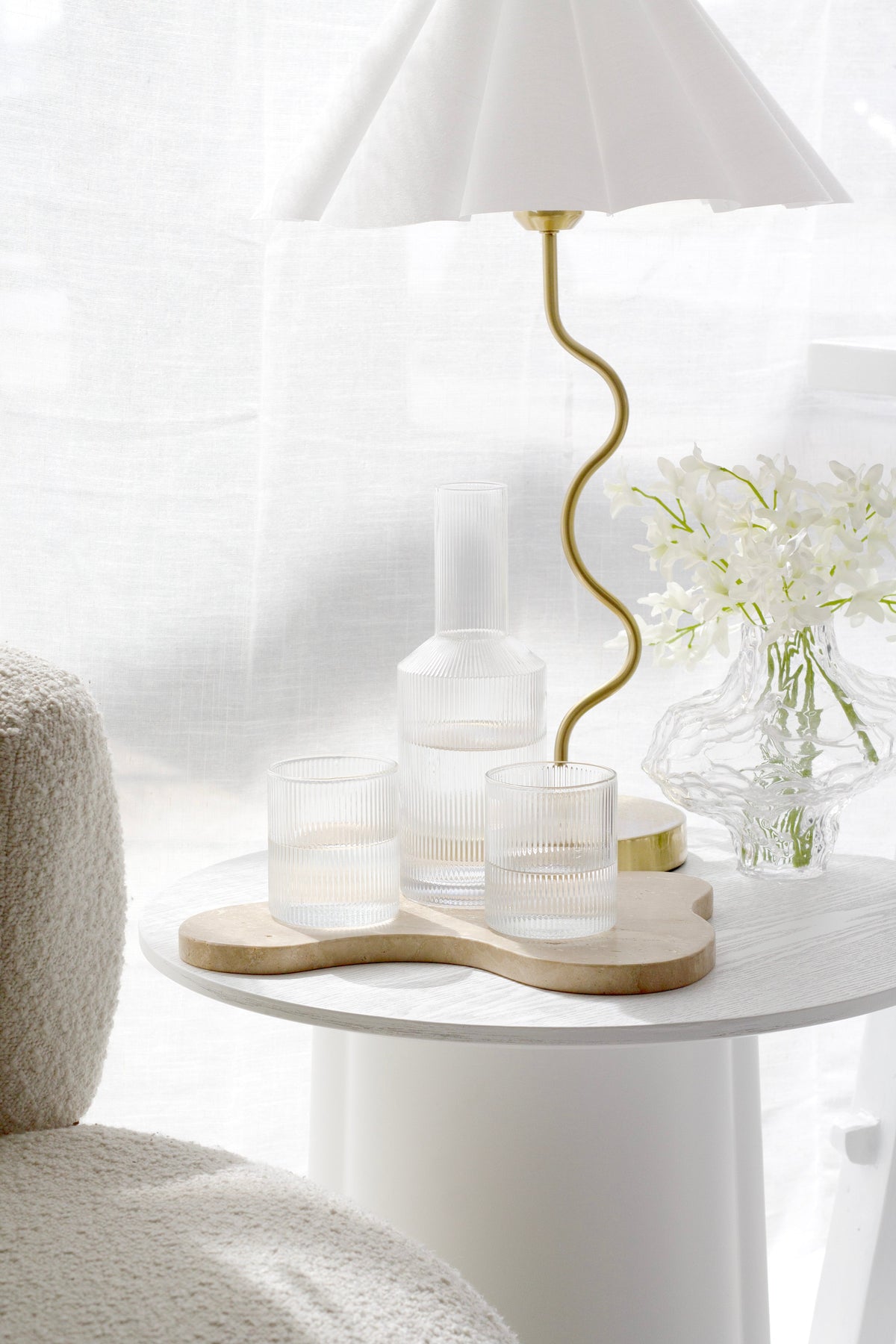
Favour low-slung furniture and wide walkways. Pull seating away from the walls if the room allows it. Use sheer curtains to soften midday light rather than block it, and let them run floor to ceiling rather than stopping at the sill. There is a whole approach to this in styling your windows for summer light.
Treat negative space as a deliberate choice rather than an unfinished one. One good vase holding a single stem will always read better than three arrangements competing on the same console. If a surface feels wrong, the answer is almost always to remove something rather than add.
Stillness is a feature, not a gap.
Furniture you can actually sit in

This is where relaxed coastal separates itself from coastal-as-showroom. The furniture has to invite use, and it has to survive being used.
Linen slipcover sofas, low timber chairs, tables that have already taken a few knocks and are better for it. Layer cushions in flax and oat, and keep a throw within reach for evenings when the wind turns southerly.
Practicality matters more here than in most styles. Removable, washable covers are worth paying for. Performance linen exists for a reason. A room that welcomes wet togs and sandy feet is one that will actually get used in January, rather than admired from the doorway.
The wider case for designing rooms around ease rather than appearance is in our room-by-room guide to quiet luxury.
Room by room
Living room

Start from the floor. A chunky jute or flat-woven wool rug sets the tone before anything else lands, and it should be larger than instinct suggests. Front sofa legs on the rug at minimum.
Add a coffee table in bleached timber or textured stone, then layer throws in cotton gauze or raw-edged linen. Keep shelves sparse: a coral fragment, an aged vase, a stack of worn books, and room enough to see each of them. There is a full method for this in styling open shelving with soul, and a companion piece on a quiet approach to coffee table styling.
Bedroom
Flax-toned linen bedding and a soft upholstered headboard do most of the work here. Add a rattan pendant or a vintage ceramic lamp, and keep surfaces to one stem, one bowl, one book.
Tones stay in the calm range: fog, sea mist, chalk, oat. Good bed linen is the single highest-return purchase in a coastal bedroom, and washed linen only improves from the third wash onward. More on building a bedroom that actually settles you in designing for stillness.
Kitchen and dining

Raw wood tables and open shelving. Handmade tableware, woven chargers, aged utensils. Stacked breadboards, dried herbs, rippled glassware that catches the light.
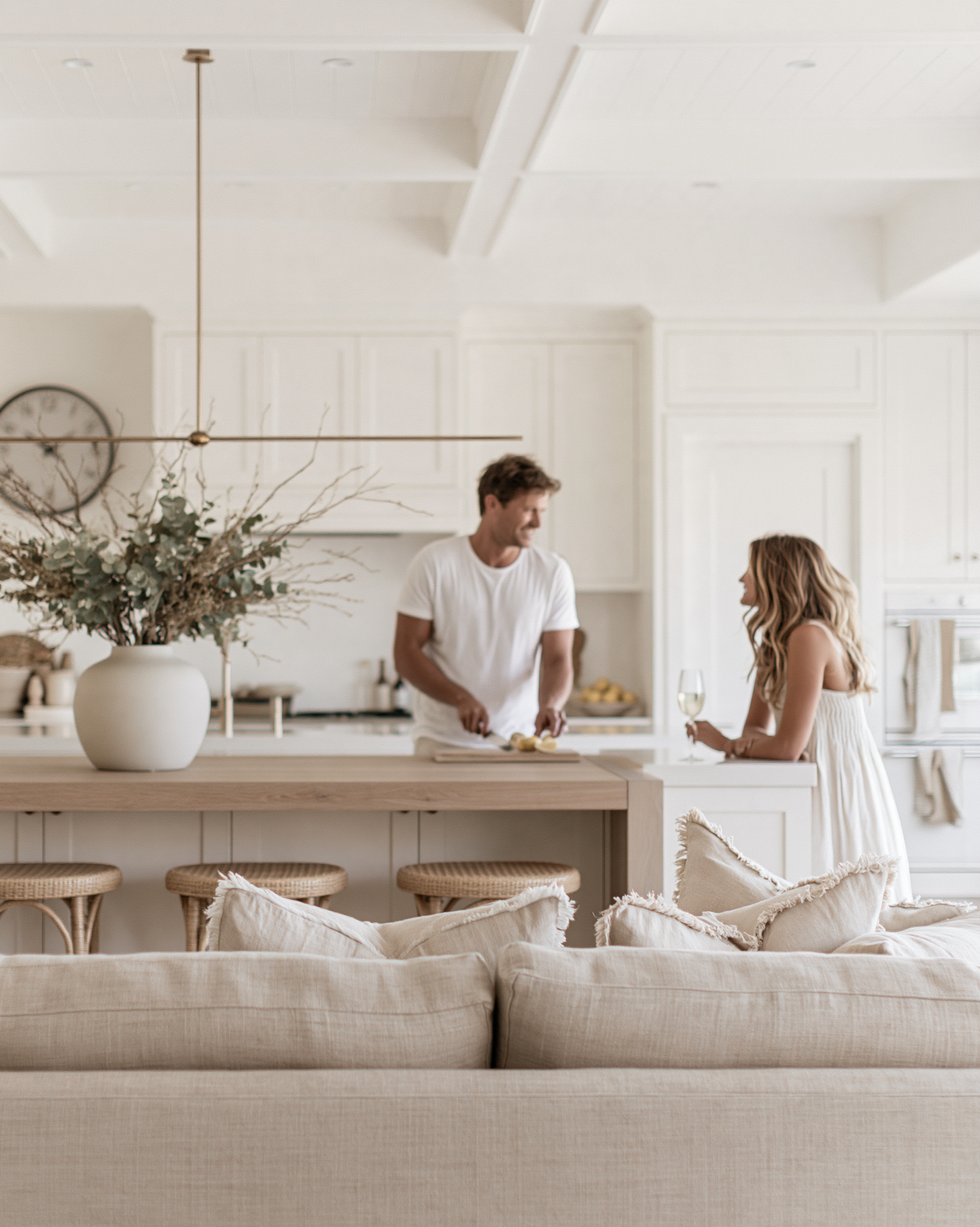
Keep the tones tonal and let texture carry the visual weight. Sculptural pendant lighting over a long table is the one place a coastal kitchen can afford a statement, whether that is a woven rattan dome or something in plaster. Hang it lower than feels comfortable, roughly 75 to 85 centimetres above the table, and the whole room gains a centre.

Bathroom

Style with eucalyptus or coastal grasses, and keep textiles in sandy hues. A timber stool or floating shelf holds natural soaps and oils. A tray to corral what would otherwise scatter across the vanity.
Everything grounded in simplicity, because a bathroom is the easiest room in the house to overfill and the hardest to recover once you have. The case for treating it as more than a utility room is in the emotional power of bathroom styling.

The small things that set the mood
The finishing layer is where a coastal room stops looking styled and starts feeling lived in.
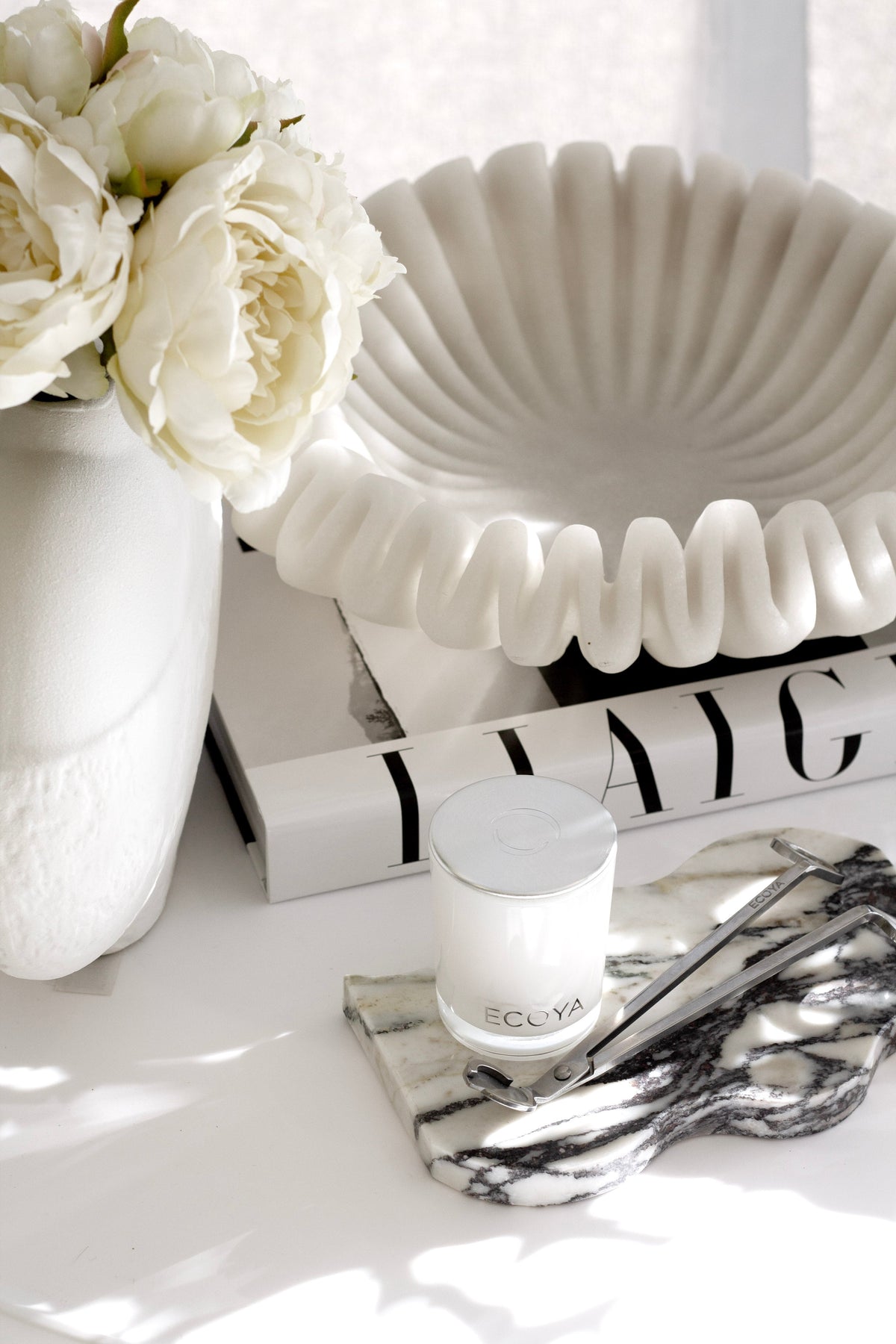
Scent. Sea salt, eucalyptus, vetiver or lemon verbena. Our summer scent thinking is set out in summer, somewhere.
Art. Ocean abstracts, coastal sketches, monochrome photography. Framed simply, hung slightly lower than you think.
Foliage. Olive, toetoe, sea holly or wild branches. Stems that look cut rather than bought.
Objects. A driftwood piece, a weathered stone, a shell someone in the family found and would not leave behind.
Books. Slow living, coastal cooking, design, memoir. Stacked, not shelved.
Where it usually goes wrong
Three mistakes account for most of it. Reaching for blue first, which pushes the room into theme rather than atmosphere. Buying texture in a single material, so a room ends up entirely rattan and reads like a showroom. And over-filling surfaces in the final stage, undoing the space that made the room calm in the first place.
The fix for all three is the same. Fewer decisions, held longer.
If you are building the look from scratch, the Coastal collection is the fastest way in.
In Short
Relaxed coastal style is a set of conditions rather than a look: low-contrast colour drawn from sand and driftwood, natural materials that improve as they wear, generous space left around furniture and objects, and light allowed to move through a room unobstructed. It suits New Zealand homes because it tolerates real life, sandy floors, wet towels and open doors right through summer, without needing to be reset every evening. Start with the floor and the light. Everything else layers on top.



Leave a comment
This site is protected by hCaptcha and the hCaptcha Privacy Policy and Terms of Service apply.