

The Enduring Appeal of French Interiors (And Why They Never Go Out of Style)
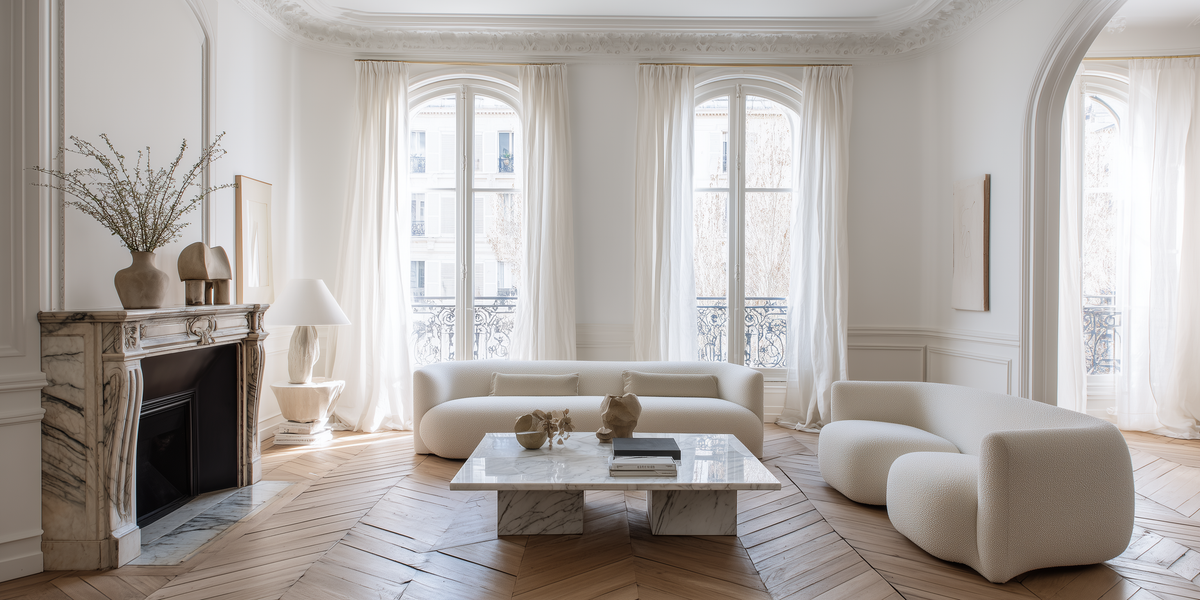
French interiors have a quiet confidence about them. They don’t shout. They don’t over-style. They don’t bend to every passing trend. And yet, decade after decade, they continue to feel relevant, desirable, and deeply liveable.
There’s a reason French homes feel timeless rather than “on trend.” They’re not designed for a moment, but for a life.

At the heart of French interior style is an understanding that beauty should feel natural, lived-in, and personal. Homes are layered slowly, shaped by history, habit, and human use rather than rigid rules. This is the essence explored so beautifully in The New French Look by Lauren Li, where contemporary French interiors reveal a balance of elegance and ease that never dates.
So what makes French interiors endure, and how can we translate those principles into modern living today?
1. French Interiors Are Rooted in History, Not Trends

French homes carry a deep respect for what came before. Original floorboards, aged stone, ornate mouldings, and imperfect plaster are not seen as flaws to be erased, but as features to be honoured.
Rather than replacing character, French interiors work with it. Old architecture becomes the foundation, while modern elements are introduced gently and thoughtfully. The result is a home that feels layered, grounded, and rich with narrative.
This relationship with history creates a sense of permanence. When a space is designed to honour its past, it naturally resists trends that would quickly feel out of place.
 How to apply this at home:
-
Preserve original features wherever possible
-
Mix contemporary furniture with vintage or inherited pieces
-
Let age and patina be part of the story, not something to hide
2. Effortless, Not Overworked

French interiors are never over-explained. There’s an ease to them that feels instinctive rather than styled. Rooms aren’t overly coordinated. Colours aren’t matched perfectly. Furniture doesn’t sit stiffly in place.
This relaxed approach is what gives French homes their signature charm. Nothing feels forced. A chair is pulled slightly away from the table. Books are stacked casually. Art leans rather than hangs perfectly centred.
The goal is not perfection, but atmosphere.
How to apply this at home:
-
Avoid symmetry for symmetry’s sake
-
Let spaces feel slightly undone
-
Style with restraint, leaving space around each piece
3. Layering With Restraint

French interiors layer texture, colour, and pattern beautifully, but always with intention. Rather than overwhelming a space, layers are added slowly and sparingly.
Muted tones form the base. Soft neutrals, warm whites, and earthy shades create calm foundations. Onto this, deeper colours, subtle patterns, and tactile materials are introduced in small doses.
This measured layering ensures interiors feel rich, not busy.
 How to apply this at home:
-
Build a neutral base before introducing colour
-
Mix materials like linen, timber, stone, and ceramics
-
Use pattern sparingly, letting it feel discovered rather than dominant
4. A Balance of Old and New

One of the most enduring qualities of French interiors is their ability to balance eras. Antique pieces sit comfortably alongside modern furniture. Contemporary lighting hangs in rooms with centuries-old bones.
This contrast creates tension and interest. It prevents homes from feeling frozen in time, while still retaining their sense of heritage.
In modern French interiors, it’s this dialogue between old and new that feels so current.
 How to apply this at home:
-
Pair modern sofas with vintage side tables
-
Introduce contemporary lighting into traditional spaces
-
Mix clean-lined pieces with more decorative elements
5. Personal Expression Over Perfection

French homes feel personal because they are personal. Art reflects taste rather than trends. Books are chosen because they’re loved. Objects are collected slowly, often tied to memory or meaning.
There is no rush to “finish” a room. Spaces evolve naturally, shaped by life rather than styling deadlines.
This is perhaps the most important reason French interiors never date: they are lived in, not staged.

How to apply this at home:
-
Display art and objects you genuinely love
-
Let rooms evolve over time
-
Resist the urge to over-style or over-purchase
6. Why French Style Translates So Well to Modern Living

In a world that moves quickly, French interiors offer something grounding. They remind us that homes don’t need constant reinvention to feel beautiful. They encourage us to slow down, to invest thoughtfully, and to live comfortably within our spaces.
The principles behind French design work just as well in contemporary apartments as they do in historic homes. They support modern life without sacrificing warmth, individuality, or soul.
 This is why French interiors continue to inspire designers, stylists, and homeowners around the world. They don’t age, because they were never chasing youth in the first place.
Bringing French Timelessness Into Your Home

If you’re drawn to interiors that feel elegant but relaxed, layered but calm, and timeless rather than trend-led, French design offers a blueprint worth returning to again and again.
Books like The New French Look provide deeper insight into how today’s French designers interpret these enduring principles, offering inspiration that feels both aspirational and achievable.
Because the most beautiful homes aren’t the newest ones.
They’re the ones that feel lived in, loved, and quietly confident.

Related: Feminine Classic: Parisian-Inspired Styling with a Modern Edge and Monochrome Mood: How to Style a Home with Sculptural Simplicity

1 comment
Love, love, love your blog. I look forward to each post. And come back to them time and time again. Thanks for the effort you put in.
Annie
Leave a comment
This site is protected by hCaptcha and the hCaptcha Privacy Policy and Terms of Service apply.