

Minimalist Home Decor: 10 Rules for a Warm, Considered Home
Minimalist interiors have moved a long way from stark white rooms, hard edges and almost-empty shelves.
The version that lasts is warmer, more personal and considerably easier to live with.
At its best, minimalist home decor is not about owning as little as possible. It is about reducing visual noise so the things you genuinely love have room to be noticed.
That means fewer pieces, but better ones. Warm neutrals rather than clinical white. Texture instead of unnecessary pattern. Useful objects that happen to be beautiful. And enough empty space for a room to feel open.
If you like the philosophy behind this approach, our guide to Soft Minimalism explores it more deeply.
If you simply want to know how to make the look work at home, start with these ten rules.

1. Start with a warm neutral foundation

A minimalist room becomes cold surprisingly quickly when every surface is bright white, grey or black.
Instead, begin with a warmer foundation.
Think:
- warm white
- oat
- flax
- sand
- mushroom
- stone
- soft taupe
- pale timber
- muted charcoal
You do not need to use them all.
In fact, a restricted palette often makes a room feel more sophisticated. Choose two or three main tones and allow subtle variations within them.
The goal is not perfect colour matching. It is continuity.
A cream sofa against a warm white wall with an oat-coloured rug and pale timber table feels layered even though very little colour has been introduced.
Styling rule: If a neutral room feels flat, add another tone before adding another colour.
2. Add texture before you add pattern

When colour is restrained, material becomes more important.
A minimalist room made entirely from smooth surfaces can feel unfinished even when every individual piece is beautiful.
Instead, mix contrasting textures:
- linen beside smooth ceramic
- boucle beside timber
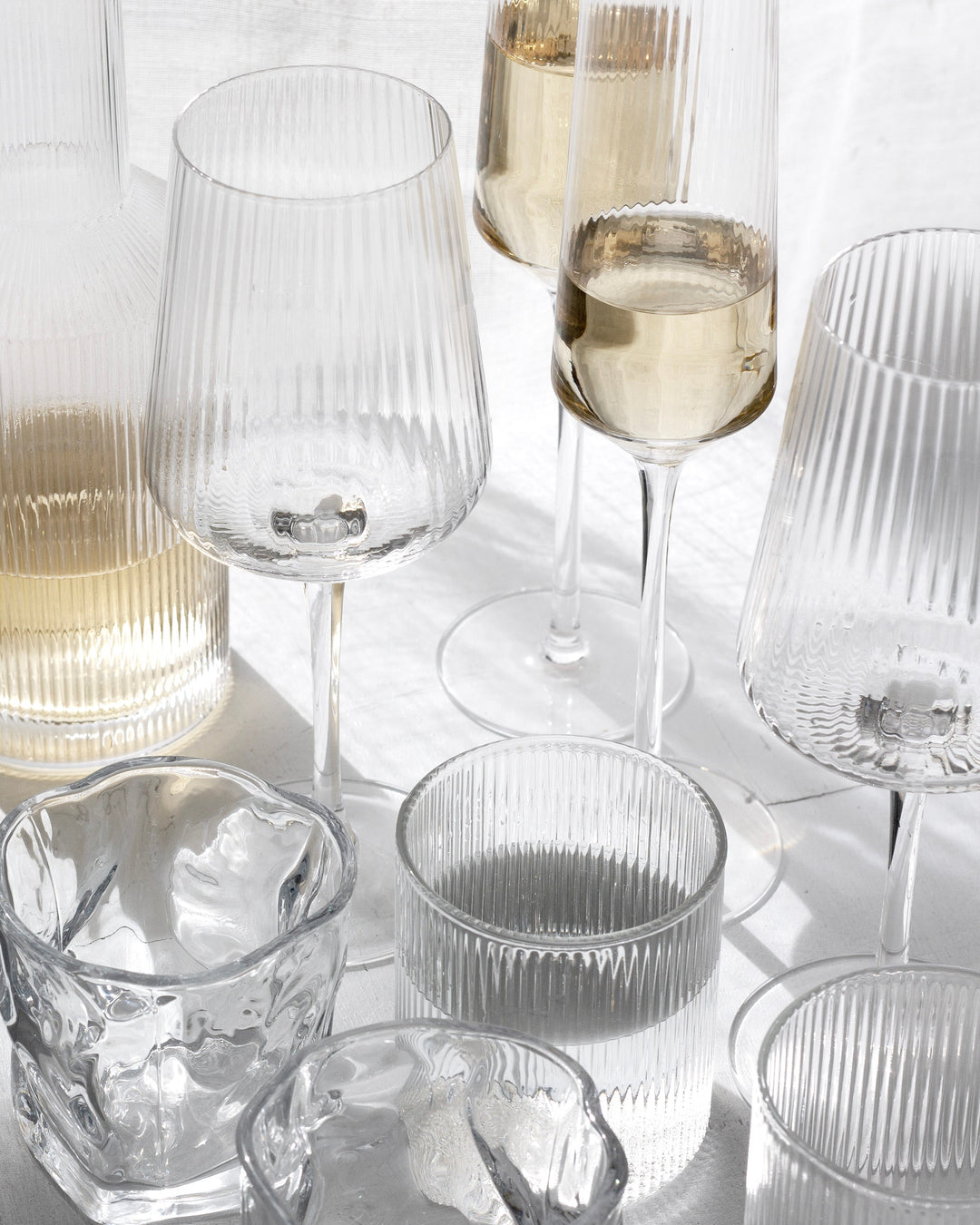
- glass beside raw stone
- woven fibres beside metal
- matte finishes beside something softly reflective
This gives the eye something to explore without adding visual clutter.
A tonal room can contain surprisingly little and still feel rich when its materials are varied.
Our guide to The Texture Effect goes deeper into using material and tactility throughout a room.
Styling rule: In a neutral space, let texture do the work that pattern would normally do.
3. Choose objects that are useful and sculptural

One of the easiest ways to make minimalism feel intentional rather than sparse is to choose functional pieces with enough form to act as decor.
A beautiful object should not always need another object beside it.
Think of:
- a sculptural vase that looks good empty
- a beautifully designed wall clock
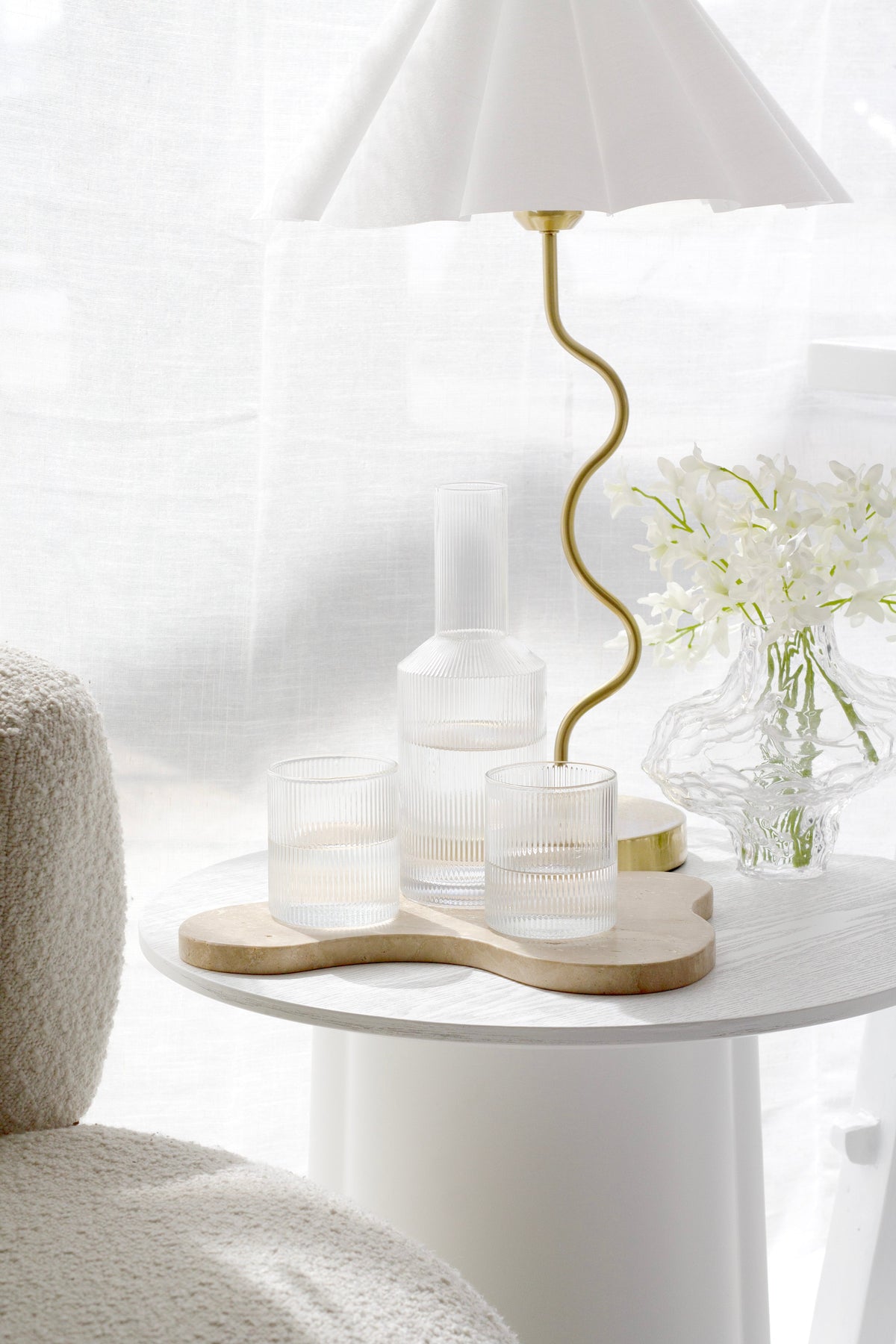
- an interesting lamp
- a curved mirror
- a ceramic bowl
- a tray with an unusual silhouette
These pieces earn their visual space because they do more than one job.
A clock tells the time but also anchors a blank wall. A vase holds flowers but can function as sculpture when empty. A lamp changes the atmosphere of the room even when switched off.
This principle is particularly useful in smaller homes where every item needs to work harder.
Browse our Decor collection for objects that balance function with form.
Styling rule: Before adding another decorative object, ask whether something useful could provide the same visual interest.
4. Think about scale before quantity

A common decorating mistake is trying to make a room feel finished by adding more small things.
Minimalist interiors usually benefit from doing the opposite.
One substantial piece often creates more impact and less visual noise than five small ones.
Instead of five little objects scattered across a sideboard, try one substantial lamp, one stack of books and one sculptural vessel.
Instead of filling a large blank wall with many small decorations, consider one oversized artwork, mirror or clock.
Scale gives a room confidence.
Small objects can still work beautifully, but they usually look more intentional when grouped into a clear composition rather than scattered individually.
Styling rule: When something feels missing, try going larger before adding more.
5. Treat negative space as part of the design

You do not need to fill every wall, shelf or corner.
In fact, the empty areas around your belongings are what allow individual pieces to stand out.
Negative space might mean:
- leaving part of a console completely clear
- hanging one piece of artwork rather than creating a gallery wall
- allowing space between furniture and walls
- resisting the urge to fill every shelf
- leaving one corner of a room visually quiet
A useful test is to remove one item from a styled surface and look again.
Often, the remaining objects immediately appear more important.
This is especially powerful in rooms containing strong architectural details, beautiful natural light or statement furniture. Sometimes the room already has enough to say.
Styling rule: Do not ask, "What should I put here?" until you have considered whether the answer might be nothing.
6. Repeat something

Minimalist rooms feel cohesive because the eye can find subtle connections from one area to another.
You do not need identical furniture or matching sets.
Instead, repeat a small design element.
It might be:
- black appearing in a lamp, picture frame and clock
- curved shapes echoed through a mirror, vase and side table
- pale timber repeated across two or three pieces
- a warm stone tone appearing in cushions, ceramics and artwork
- brushed metal used sparingly throughout the room
Repetition creates rhythm.
It makes separately purchased objects feel like they belong together without making the room look overly coordinated.
Styling rule: Repeat a colour, material or shape at least twice before introducing another.
7. Layer your lighting

Minimalism relies heavily on atmosphere, and lighting has an enormous influence on how a restrained room feels.
One bright ceiling light can flatten every texture and remove the softness you have worked to create.
Instead, build layers.
Try combining:
- natural daylight
- a table lamp
- a floor lamp
- wall lighting
- a small rechargeable lamp
- candles in the evening
Different heights are important.
Light coming from several lower sources creates depth, shadows and small areas of focus.
You do not need to change your electrical plan to make a difference. Adding one table lamp to a room previously lit entirely from the ceiling can change it immediately.
Explore our Lighting collection for portable and sculptural options.
Styling rule: Aim for two or three sources of light rather than one source trying to illuminate the entire room.
8. Add nature, but keep it intentional

Natural elements prevent minimalist interiors from feeling overly controlled.
You might use:
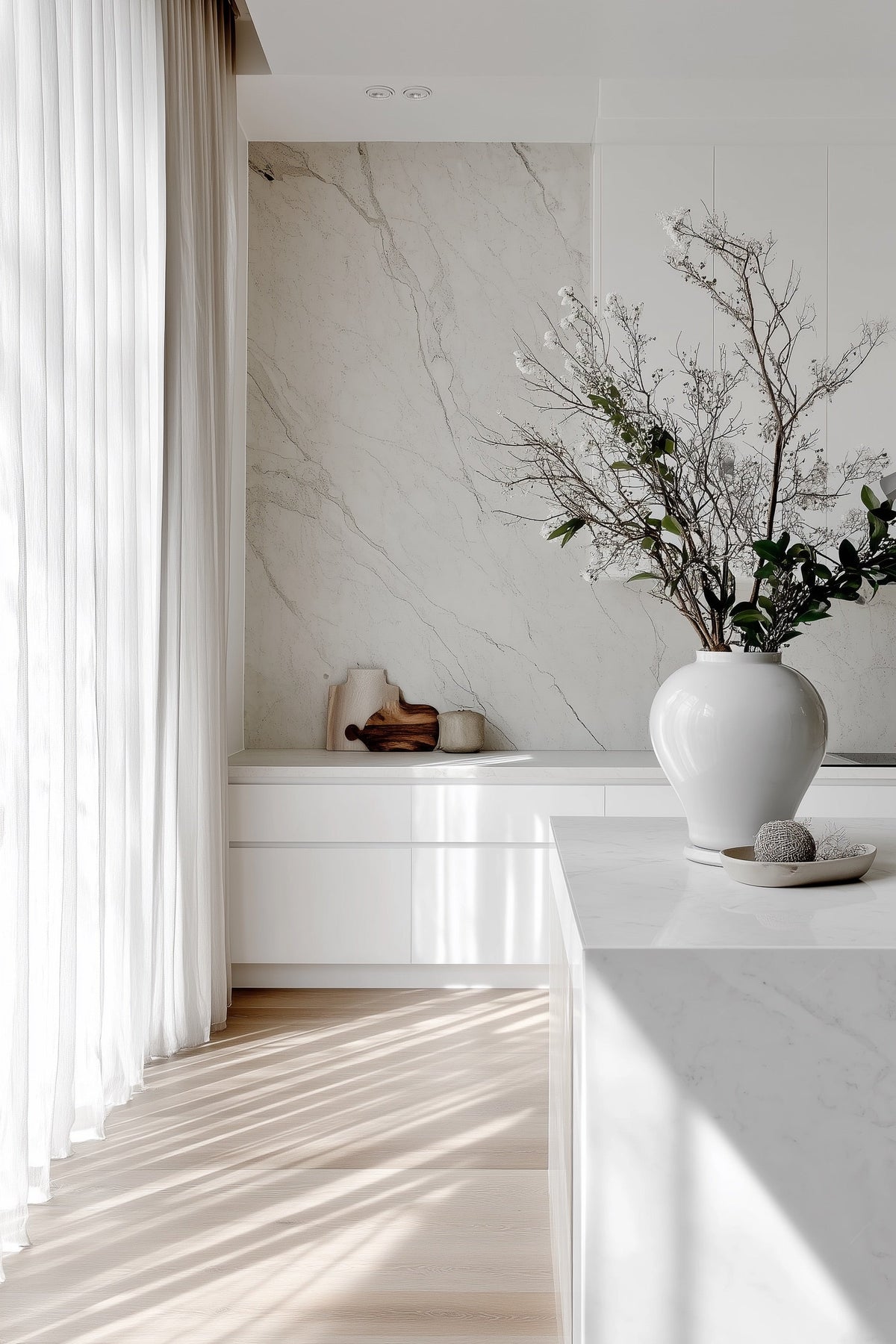
- a branch in an oversized vase
- a single flowering stem
- greenery
- timber
- stone
- shells or collected natural objects
- an indoor plant
The key is restraint.
Rather than scattering small plants across every surface, consider one larger plant that gives the room presence.
Instead of a complicated floral arrangement, try three branches in a sculptural vase.
Nature already contains irregularity, texture and movement. It creates contrast beautifully against the cleaner lines of a minimalist room.
Styling rule: Choose one strong natural gesture rather than many small decorative ones.
9. Style surfaces using three ingredients

You do not need a complicated formula to style a shelf, bedside table or console.
Start with three things:
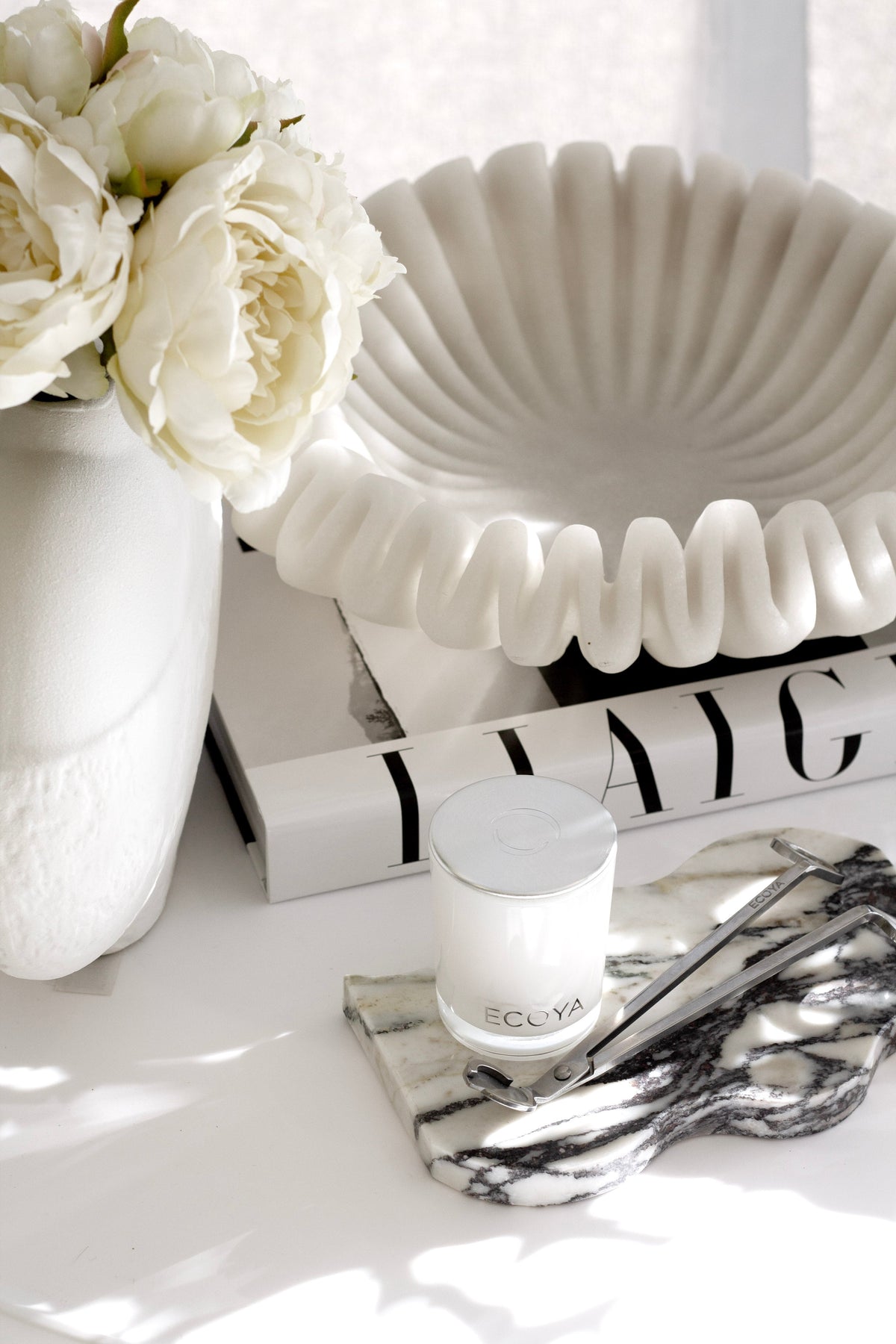
Something with height. A lamp, vase, plant or tall object.
Something lower. A bowl, candle, stack of books or tray.
Something personal or organic. A photograph, collected object, branch, flower or favourite book.
Then stop and look.
You may not need anything else.
Vary the height and shape of the objects rather than lining them up, and leave some of the surface visible.
If you are styling several shelves, do not repeat the exact same arrangement on each one. Allow some shelves to hold several objects and others just one.
Our guide to Styling Open Shelving goes into the process in more detail.
Styling rule: Build the composition, then remove the least important piece.
10. Decorate slowly

Perhaps the most useful minimalist styling principle is also the least exciting:
Do not rush to finish the room.
A home assembled entirely in one shopping trip often lacks the variation, history and personality that make interiors interesting.
Leave the gap.
Wait for the right lamp.
Bring the vase home and see how it feels before buying something to place beside it.
Move things from other rooms.
Live with the empty wall.
The best interiors tend to contain pieces collected at different moments rather than everything being chosen simultaneously.
Minimalism makes this approach easier because an unfinished space does not automatically look wrong.
Sometimes what looks like an empty corner today simply has not met the right object yet.
Styling rule: A space does not have to be finished to feel considered.
Minimalist Styling Room by Room

Living room
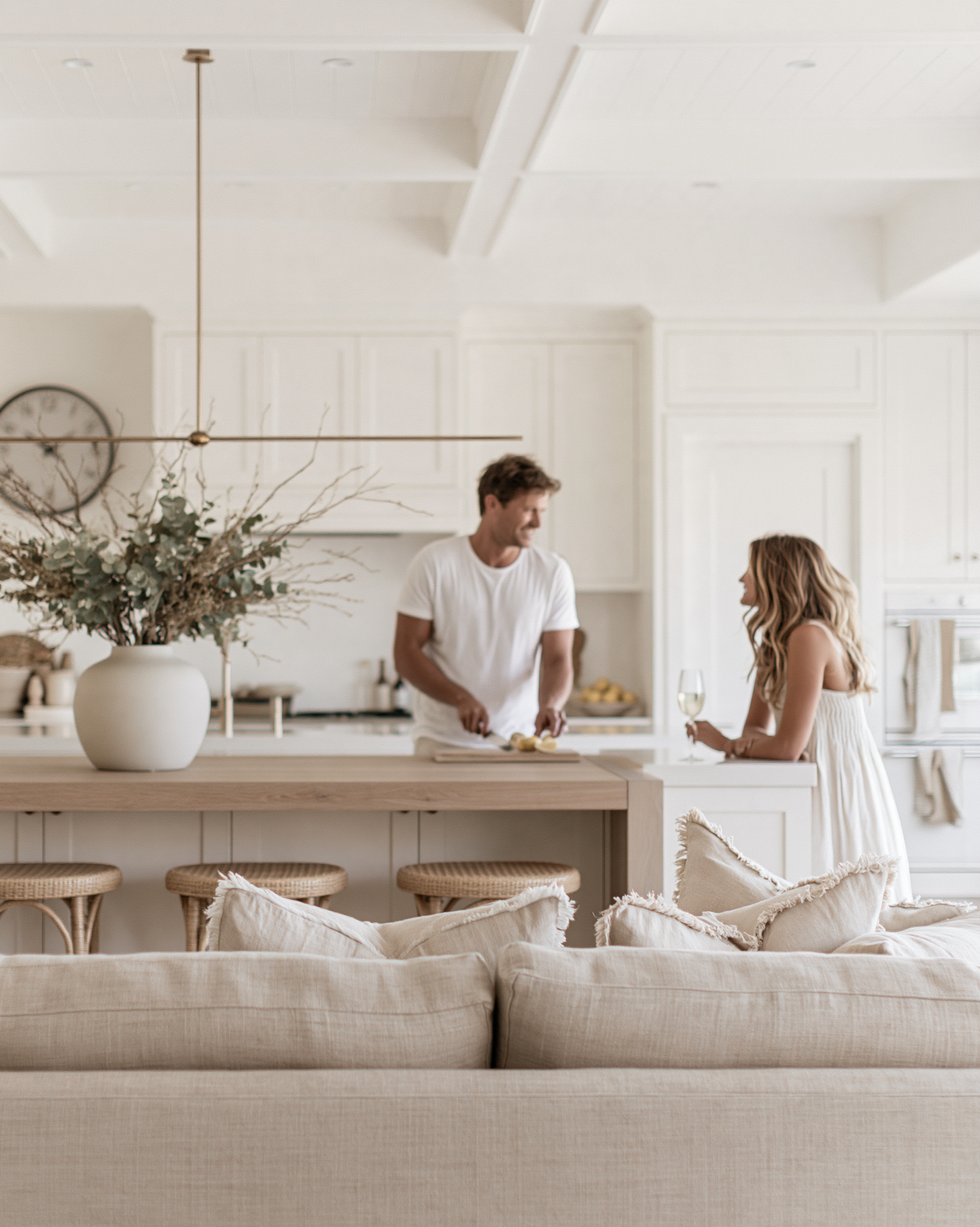
Start with your largest pieces and leave clear space around them.
Keep coffee-table styling low enough that it does not interrupt sightlines. Use one strong vase, bowl or book stack rather than covering the entire surface.
Add warmth through cushions, throws and lighting rather than adding more decorative objects.
Bedroom
Keep the palette especially quiet.
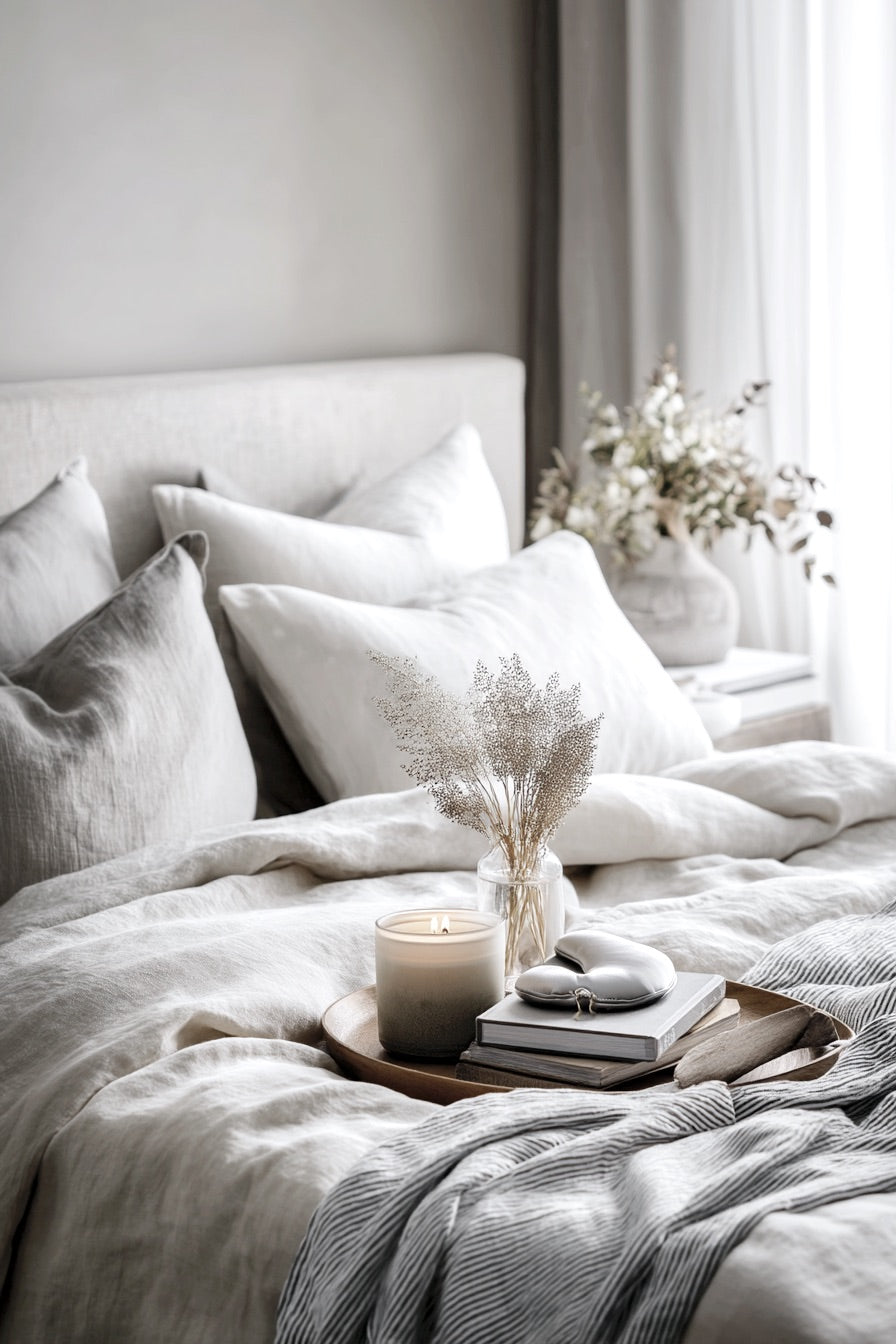
A lamp, book and small vessel are often enough for a bedside table.
Choose bedding with visible texture and allow a little imperfection. A softly rumpled linen or cotton bed feels more inviting than something styled too precisely.
Kitchen
Minimalism in the kitchen is largely about reducing visual noise.
Keep frequently used objects accessible, but group them deliberately.
A tray can turn oils, salt and cooking utensils into one visual zone rather than several separate objects.
Leave stretches of the benchtop empty wherever practical.
Entryway
An entry needs to be functional first.
Give keys, bags and daily objects a designated home, then add one visual anchor such as a mirror, lamp, clock or vase.
If the area becomes cluttered easily, solve the storage problem before adding more decor.
Common Minimalist Decorating Mistakes

Making everything the same colour
Minimalism does not require every object to be beige.
Contrast gives neutral rooms definition. Black, dark timber, aged metal or a deeper natural colour can provide just enough tension.
Buying lots of small decor
Small objects accumulate visual noise quickly.
Group meaningful pieces or replace several insignificant objects with one stronger piece.
Removing all personality
A room should still tell you something about the people living there.
Books, photographs, travel finds, artwork and sentimental objects can all belong in a minimalist home. The difference is that they are intentionally displayed rather than competing with everything else.
Confusing empty with finished
Removing things is only half of the process.
Warm minimalism relies on proportion, lighting, material and texture as much as restraint.
Following every trend
Minimalism works best when it makes your home easier to live in, not when it becomes another aesthetic rulebook.
Take the principles that improve your space and ignore the ones that do not.
Minimalist Home Decor FAQs
What is minimalist home decor?
Minimalist home decor uses fewer, more intentional pieces to create visually calm and functional interiors. It usually relies on a restrained colour palette, thoughtful use of negative space, simple forms and carefully chosen materials rather than large amounts of decoration.
How do you make a minimalist home feel warm?
Use warm neutrals, natural materials, layered lighting and plenty of texture. Timber, linen, wool, ceramic and softly diffused light can prevent minimalist interiors from feeling stark.
What colours work best in minimalist interiors?
Warm whites, stone, oat, flax, sand, mushroom and pale timber are useful foundations. Darker accents such as charcoal, black, olive or walnut can then be used sparingly to create contrast.
Can a minimalist home still have personality?
Absolutely. Minimalism is not about removing sentimental or expressive objects. It simply gives them more visual space. Artwork, books, photographs and collected pieces can become more noticeable when they are not surrounded by unnecessary clutter.
How many decorative objects should I put on a surface?
There is no fixed number, but starting with around three objects of different heights and scales is useful. Style them as a composition, leave visible space around them and remove anything that does not contribute.
In Short
A minimalist home does not need to be empty, beige or perfect.
The most enduring version of minimalism is simply considered.
Fewer pieces competing for attention. Better lighting. More tactile materials. Objects with a reason to be there. Space around the things you genuinely love.
If a room feels overwhelming, remove something.
If it feels cold, add texture.
If it feels flat, change the lighting.
If it feels unfinished, give it time.
Because the goal is not to create a home with less personality.
It is to create enough space for your personality to be seen.
Explore our Decor collection for sculptural, useful pieces designed to work beautifully in considered spaces.
Written by Emma Walsh

Leave a comment
This site is protected by hCaptcha and the hCaptcha Privacy Policy and Terms of Service apply.