



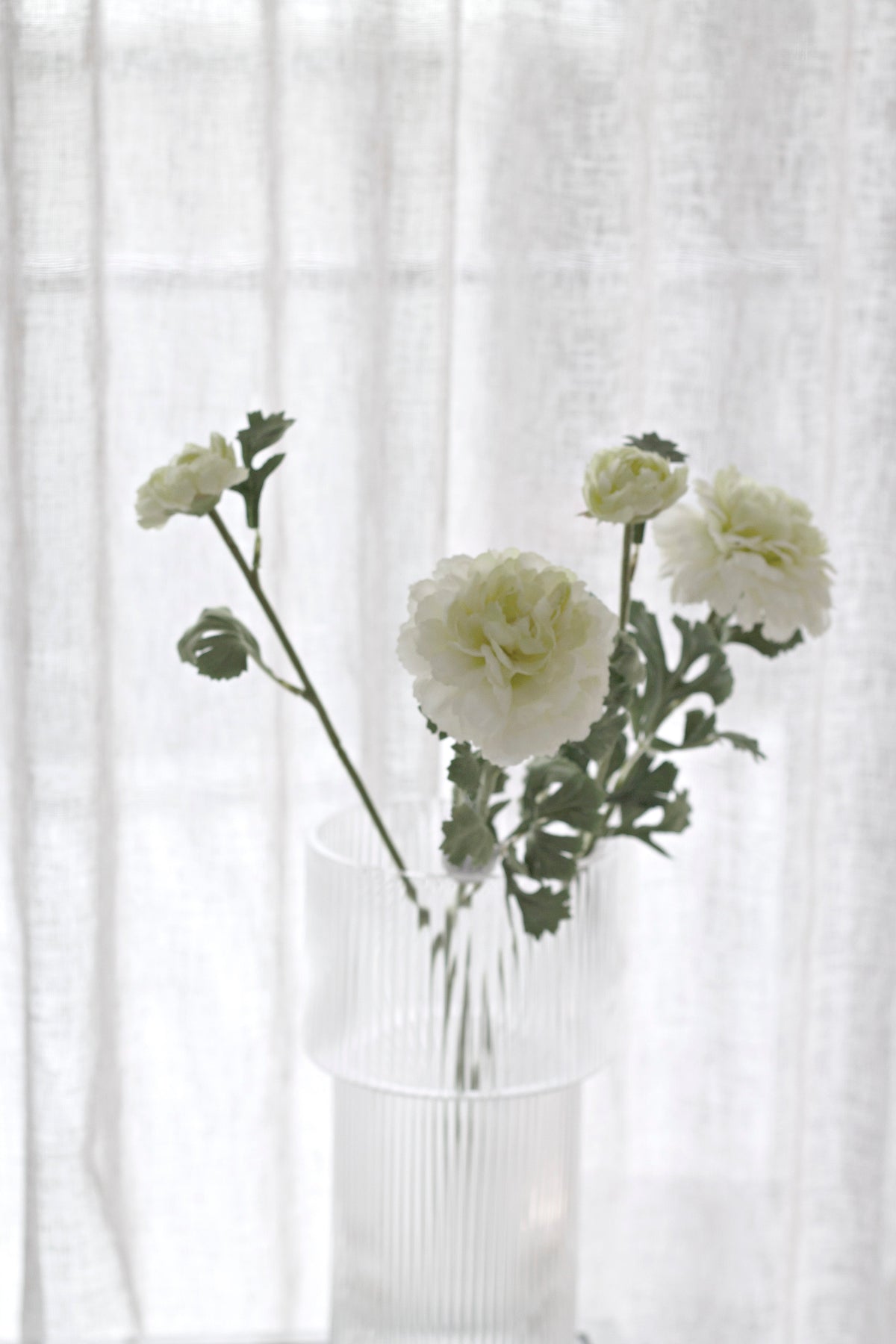
How to Clean Faux Flowers and Plants (and Keep Them Looking Real for Years)
The first thing that gives a faux flower away is not the petals or the stem. It is dust. A fine grey film on the top of the leaves, the kind you only see when the afternoon sun comes in low, turns a convincing arrangement into an obviously artificial one in a matter of weeks.
The good news is that faux flowers and plants are easy to care for. Ten minutes every month or so is enough. We have already covered how to unpack and shape new stems in How to Make Artificial Flowers and Plants Look Real. This guide is about what comes after: keeping them looking that way.
Little and often beats a big clean
Dust is far easier to lift before it settles in. A quick once-over every few weeks takes seconds, while a year of build-up takes a proper session at the sink.
For most stems, a soft, dry make-up brush or a clean paintbrush is the best tool. Work from the top of the stem down, flicking dust off each petal and leaf. A microfibre cloth does the same job on larger, flatter leaves. For dense flowers like hydrangea or astilbe, a hairdryer on the cool setting, held at arm's length, will lift dust out of the gaps without you having to touch every floret.

Feathery stems like the Dried-Look Astilbe Spray respond best to the hairdryer method. A brush tends to separate the plumes.
A deeper clean, when it is needed
If an arrangement has been sitting in a kitchen, where cooking leaves a slightly sticky film, dusting alone will not do it. Here is how to go a little further.
For firm leaves and real-touch stems. Wipe each leaf with a cloth dampened in lukewarm water with a drop of mild dish soap, then with a cloth dampened in plain water, and let them air dry fully before they go back in the vase. Glossy, structured leaves like those on the ZZ Plant clean up beautifully this way.

For fabric petals. Be more careful with fabric blooms. Too much water can loosen glue or make colours run, so spot-clean with a barely damp cloth and dry them straight away. If in doubt, test a hidden leaf first.
For sturdy bunches. A well-known trick is to place the stems head-first in a large bag with a couple of tablespoons of coarse salt, hold the bag closed around the stems and shake gently. The salt acts as a light scrub. It works well on sturdy foliage and greenery, but skip it for delicate petals and anything with a dried-look finish.
Trailing plants need a different approach
Trailing and hanging plants collect dust along every strand, and they tangle easily. Lay them flat on a clean towel, work along each strand with a dry brush, and then shake them out gently before you rehang them. The Faux Pea Leaf Hanging Bush and the Faux Watermelon Peperomia both come up well after this kind of reset.

Once they are back in place, take a moment to reshape the strands so they fall naturally. A trailing plant that hangs in one straight curtain looks far less real than one where some strands are longer than others.
Where you put them matters
New Zealand sun is strong, and it is the main thing that ages a faux arrangement. Most faux flowers and plants are made for indoor use. A stem that sits in direct sunlight on a north-facing windowsill will fade over time, just as a rug or a cushion does. Where you can, choose a spot with bright but indirect light.

Keep them away from direct heat, too. A heat pump blowing straight onto a vase all winter dries and warps some materials, and a spot beside the oven or a candle is best avoided. A little distance goes a long way.
Greenery like the Gum Drop Eucalyptus Bush is forgiving in a bright room, which is part of why it is such a useful filler in mixed arrangements.
Storing seasonal stems
If you rotate your flowers with the seasons, and we would encourage it, store the resting stems carefully. Clean them first, then lay them flat in a box with tissue paper between layers. Avoid crushing blooms under heavier stems. When you bring them out again, a few minutes of reshaping, or a quick blast of steam from a kettle held well away for fabric petals, will bring them back.
Browse our full range of faux flowers, single stems and potted faux plants for your next arrangement.
In Short
To clean faux flowers and plants, dust them every few weeks with a soft dry brush or microfibre cloth, or use a hairdryer on the cool setting for dense blooms. For a deeper clean, wipe firm and real-touch leaves with a cloth dampened with mild soapy water, then plain water, and let them dry fully. Spot-clean fabric petals with a barely damp cloth. A bag of coarse salt, gently shaken, can scrub sturdy greenery. Keep arrangements out of direct sun and away from heat pumps and ovens to prevent fading and warping, and store seasonal stems flat in a box with tissue paper.
Still deciding whether faux is right for you? Start with Everlasting Beauty: The Benefits of Choosing Artificial Flowers.



Leave a comment
This site is protected by hCaptcha and the hCaptcha Privacy Policy and Terms of Service apply.