


The Subtle Connection Between Gratitude and a Home That Feels Good
"It just feels unfinished." It is one of the most common things people say about a room, and very often the answer is not another purchase. Look at what is already there: a timber sideboard from a parent's house, a rug carried back from a trip, a window that catches the late afternoon sun. Sometimes the best change is moving one chair so you can sit in that sun.
Most of us walk into our own homes and see the list: the wall that needs painting, the couch that has seen better days. Gratitude is simply the habit of seeing the other list, the things that are already good. It turns out that habit changes quite a lot about how a home feels.

Gratitude changes what you notice

When you look at a room for what is working, different things come into view. The way morning light falls across the floorboards. The chair that has been the best seat in the house for twenty years. The kitchen bench that has carried thousands of ordinary dinners. None of these is new, and none is on a mood board, but they are the reasons a house feels like yours.
Gratitude journalling, the habit of regularly writing down a few things you are thankful for, is one of the better studied habits in positive psychology. People who keep it up tend to report feeling a little more positive. The effects are modest, and they seem to depend on the practice feeling fresh rather than rote, which is a good argument for making it specific. "My home" is hard to feel anything about. "The way the kitchen smells when the bread is in" is easy.
It changes how you choose

When you begin from what you already have, you buy differently. You stop trying to fill every corner, and you are less tempted by the quick purchase that promises to fix a feeling. You keep the vase that belonged to your grandmother because it means something, and you let the scratched table stay scratched because it has years of family meals in it.
That does not mean never buying anything new. We run a shop, after all, and we love helping someone find the piece a room has been waiting for. It means choosing slowly and choosing things that will earn their place alongside what you already love. A home layered with memory will always feel warmer than one furnished in a single weekend. If you want to see this approach on a shelf, we wrote about it in Styling Open Shelving: Simple Layers, Honest Beauty.
It turns routine into ritual

Much of home life is repetition: cooking, folding, watering, tidying. Gratitude does not make these jobs disappear, but it can change how they feel. Lighting a candle while you cook. Folding the washing on the bed in the afternoon light. Opening the windows on a spring morning and noticing the sea air. These are small moments, and when you pay attention to them, the day has more good in it than you might have counted.
Simple ways to practise gratitude at home

Keep a noticing journal

At the end of the day, write down one or two small details from home that you appreciated: clean sheets, rain on the roof, a quiet cup of tea. Keep it short so it lasts. The One Line a Day five-year memory book is ideal because it asks for a single line, and in a year's time you will find last year's entry sitting right above today's. For a family version, the Olive + Page All the Good Things gratitude journal has prompts that work well around the dinner table.
Make a small gratitude tray or shelf
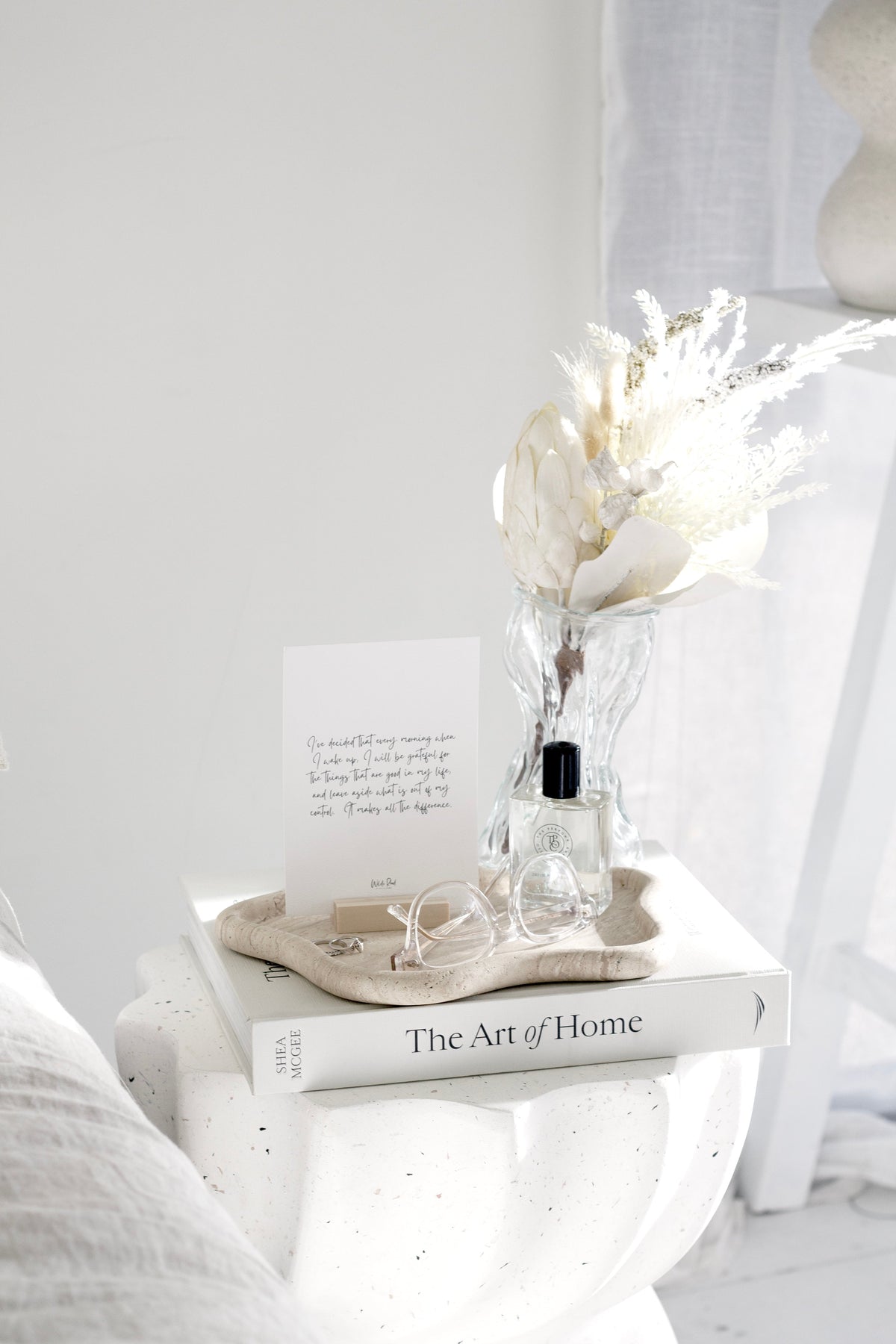
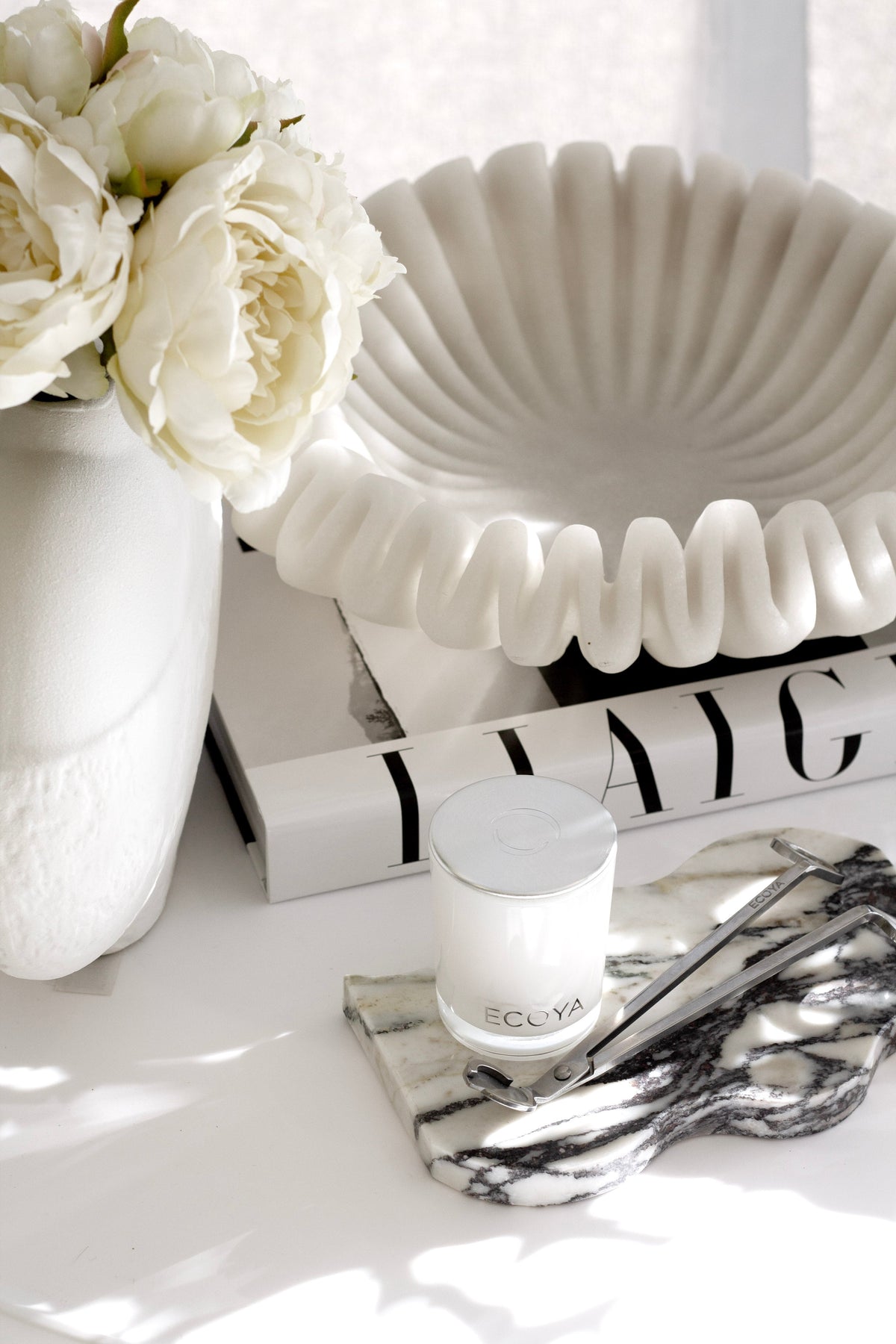
Set aside one surface for things that mean something: a photo, a shell from a favourite beach, a note in someone's handwriting. A tray keeps the collection together and makes it look deliberate rather than cluttered. The medium Wooden Circle Tray in mango wood is the right size for a bedside table or the end of a bench.
Mark the start and end of the day
Light a tea light at breakfast in winter, or open the windows at dusk in summer. A small Billy ceramic tea light holder on the kitchen table makes this a two-second habit.
Bring in something from outside
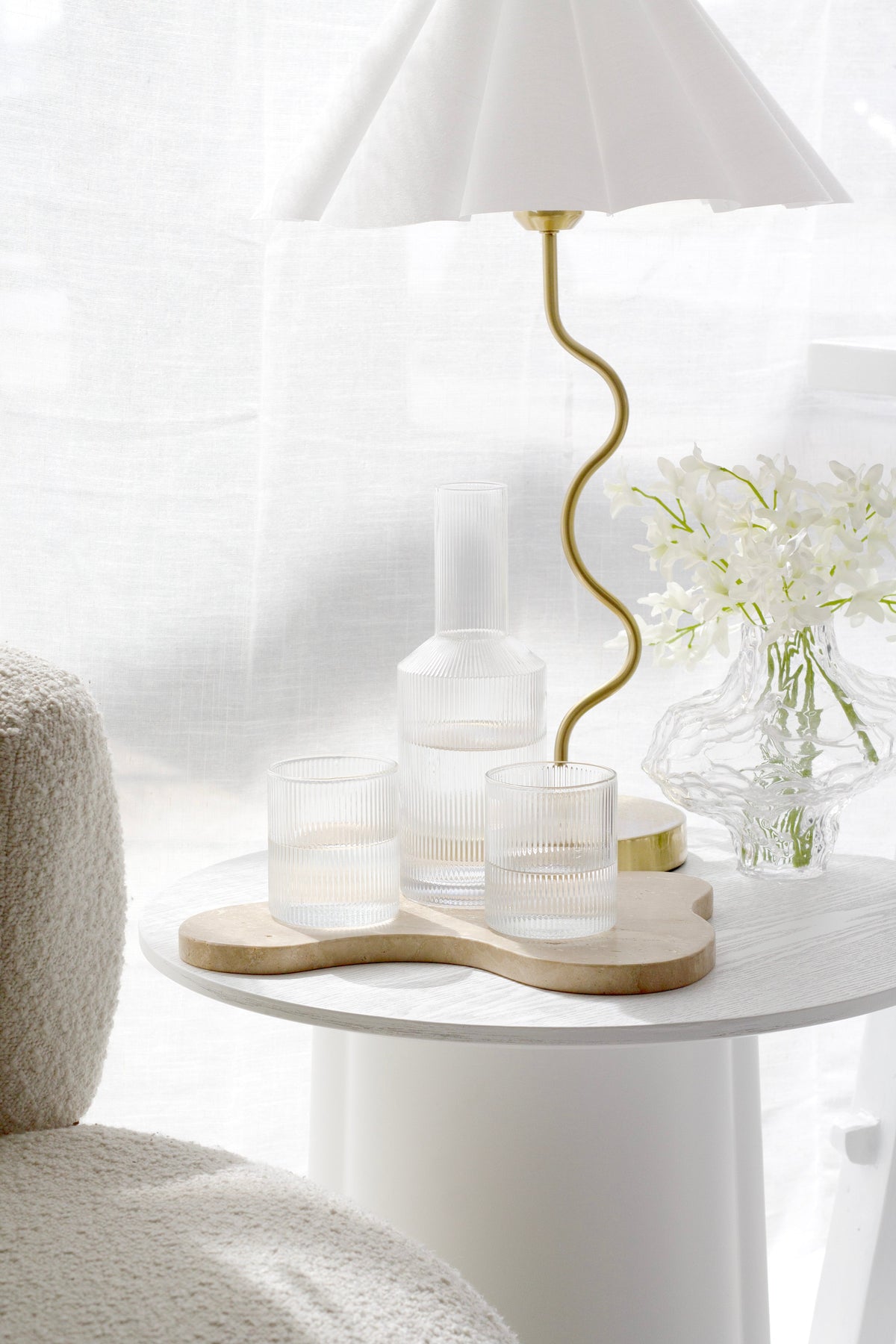
A branch from the garden, a few flowers from the market, a bowl of seasonal fruit. Change it with the seasons so you notice them passing: citrus in winter, feijoas in autumn, stone fruit in summer.
Do one job slowly
Choose one everyday task, like making the bed, watering the plants or washing the dishes, and do it without rushing. Notice the textures and the sounds. It is a surprisingly good way to arrive back in your own home at the end of a busy day.
Frequently asked questions
How do I start a gratitude practice if journalling feels like a chore?
Make it smaller. One line a day is enough, and saying it out loud over dinner counts. The point is to notice, not to write well.
Does gratitude mean I should not want to change anything about my home?
No. It simply means starting from what is already good. Changes you make from that place tend to be more considered, and you are more likely to love them for longer.
In Short
A home that feels good is rarely a finished or perfect one. It is one you have learnt to see clearly, with the worn table and the good light and the objects that carry your story. Gratitude is the habit that helps you see it. Start with one line a day and one surface that holds what matters, and you may find the room you thought was unfinished was nearly there all along.


Leave a comment
This site is protected by hCaptcha and the hCaptcha Privacy Policy and Terms of Service apply.